October 23, 2026 | IntegraMSP Security Advisory – Jennifer Gilligan, President
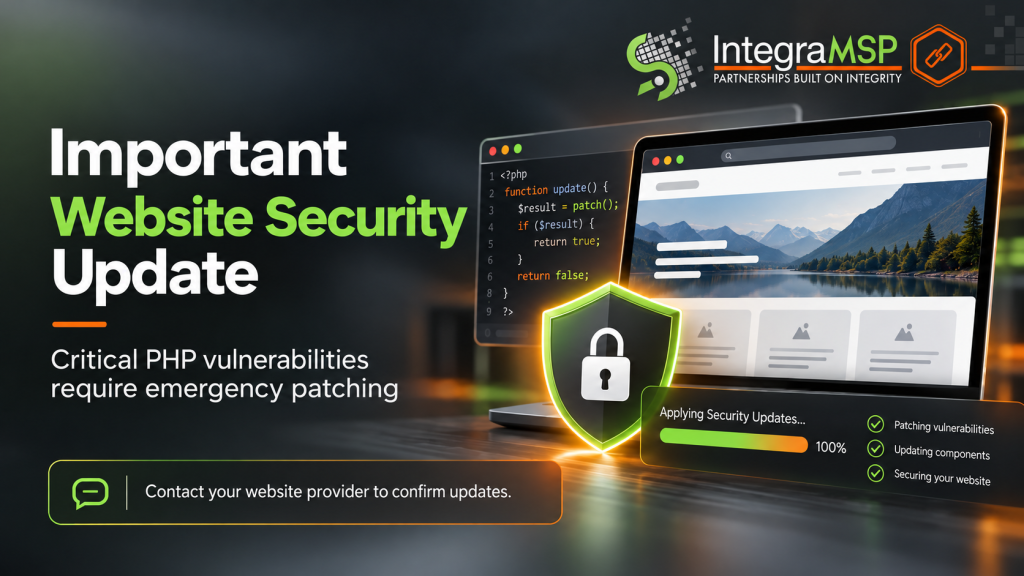
This week, two critical security vulnerabilities were discovered, and emergency updates were released for PHP, a widely used technology that helps power millions of websites, including many built on platforms such as WordPress.
While the news has generated significant attention, there is no reason to assume your website has been compromised. However, there is a good reason to take a few proactive steps to make sure it remains secure.
What Happened?
On October 21, emergency security updates were released to address two serious vulnerabilities in PHP, the technology responsible for many of the functions that happen behind the scenes when someone visits a website.
These vulnerabilities could potentially allow cybercriminals to execute unauthorized commands on vulnerable website servers without needing a username or password.
The good news? Security updates are now available, and website administrators can take action to address the risk.
What Should Your Business Do?
We strongly recommend contacting your website developer, hosting company, or website management provider as soon as possible.
Ask them to confirm:
- Whether your website or hosting environment uses PHP and is affected by these vulnerabilities.
- Whether the latest emergency security patches have been applied.
- Whether they have checked for any signs of unauthorized activity.
- Whether a current backup is available before making changes.
Even if your website is managed by a third party, it’s worth confirming that these updates have been addressed rather than assuming they happen automatically.
Will My Website Experience Downtime?
Possibly, and that’s something we want businesses to be prepared for.
Depending on your website’s configuration, applying security updates may require a short period of maintenance or temporary downtime. Some websites may also need compatibility testing to make sure their applications and plugins continue working correctly.
Not every website will need to go offline. Your website provider should be able to explain what to expect and coordinate the process to minimize disruption.
A brief, planned interruption is generally preferable to the potentially much larger disruption caused by a security incident.
What Happens If the Updates Are Ignored?
Leaving a vulnerable website unpatched can expose a business to several risks, including:
- Website compromise: Attackers could potentially gain unauthorized access or alter website content.
- Data exposure: Sensitive business information, customer records, or website credentials could be put at risk.
- Malware: A compromised website could be used to distribute malicious software or redirect visitors to unsafe websites.
- Business interruption: Recovering from an attack could result in significantly longer downtime than a planned maintenance window.
- Reputation damage: A compromised website can undermine customer trust, especially when personal or payment information is involved.
These are potential consequences, not indications that your website has already been attacked.
A Little Prevention Goes a Long Way
Cybersecurity isn’t about eliminating every possible risk. It’s about recognizing vulnerabilities and addressing them before they become larger problems.
For this particular issue, the recommended action is straightforward: contact the company responsible for managing your website and confirm that the necessary security updates have been applied.
If updates cannot be completed immediately, ask your provider what temporary protective measures are appropriate, including whether the affected website should be taken offline until it can be secured.
A little planned maintenance today can prevent a much bigger headache tomorrow.
IntegraMSP | Keeping businesses informed, protected, and prepared.